

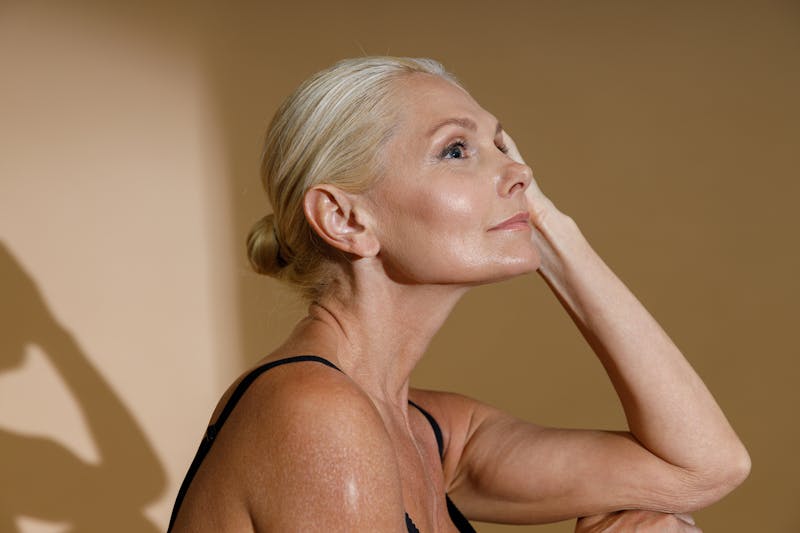
Losing weight is a significant accomplishment that improves overall health, but many people are surprised to find that their neck appears older afterward. The skin and underlying tissues of the neck often struggle to bounce back after volume loss, revealing sagging, banding, and wrinkles that were previously less visible. Board-certified plastic surgeon Edward H. Davidson, MD, FACS, FAAP, helps patients understand why this happens and what can be done to restore a youthful, defined neckline.
In this blog, we will discuss the anatomy of neck aging, how weight loss accelerates visible changes, and the surgical and non-surgical options available to rejuvenate the neck.
Understanding the Anatomy of Neck Aging
The neck is one of the first areas to show signs of aging due to its unique anatomical structure. Several factors contribute to the visible changes that occur over time:
- Skin thinning: The neck has thinner, more delicate skin than the face, making it more susceptible to damage and laxity.
- Collagen breakdown: Collagen production decreases by approximately 1% per year after age 20, reducing skin elasticity.
- Platysma muscle changes: The thin muscle bands running vertically along the neck can separate and become more prominent with age.
- Fat redistribution: Subcutaneous fat beneath the chin and along the jawline shifts and diminishes over time.
- Sun exposure: Years of UV damage accelerate collagen breakdown and contribute to crepey texture.
These structural changes happen gradually, but weight loss can suddenly make them much more apparent.
How Weight Loss Reveals Hidden Neck Aging
When you carry extra weight, the additional fat beneath your skin acts as a natural filler, smoothing out wrinkles and keeping tissues taut. Significant weight loss removes this cushioning effect, and the skin that stretched to accommodate the extra volume may not shrink back completely.
- Reduced skin elasticity: Older skin has less ability to contract after volume loss due to diminished elastin fibers.
- Exposed platysma bands: Fat loss reveals the underlying muscle structure, creating visible vertical cords.
- Jowl formation: Loss of volume along the jawline allows skin to drape downward, blurring the jaw-neck junction.
- Increased wrinkling: Without underlying fat support, fine lines and horizontal creases become more pronounced.
- Turkey neck appearance: Loose, hanging skin beneath the chin becomes more obvious without fat to provide structure.
The degree of skin laxity after weight loss depends on factors including age, genetics, how much weight was lost, and how quickly the loss occurred. Rapid weight loss typically results in more excess skin than gradual reduction.
Why the Neck Is Particularly Vulnerable
The neck faces unique challenges that make it especially prone to showing age after weight loss:
- Constant movement: Daily activities like turning, nodding, and looking down stress the neck skin repeatedly.
- Gravity effects: The neck's vertical orientation means gravity constantly pulls tissues downward.
- Neglected skincare: Many people apply sunscreen and anti-aging products to their face but forget the neck.
- Fewer sebaceous glands: The neck produces less natural oil than the face, leading to drier, less resilient skin.
- Limited fat compartments: Unlike the face, the neck has fewer distinct fat pads to maintain structure after weight loss.
Solutions for Post-Weight Loss Neck Rejuvenation
Dr. Davidson offers several approaches to address neck aging that becomes more prominent after weight loss. The right option depends on the degree of skin laxity, muscle banding, and individual aesthetic goals:
- Neck lift surgery: Removes excess skin and tightens underlying muscles for dramatic, long-lasting improvement.
- Platysmaplasty: Specifically addresses separated platysma bands by suturing the muscles together at the midline.
- Liposuction: Removes residual fat deposits beneath the chin when skin quality is still good.
- BOTOX for neck bands: Relaxes prominent platysma muscles to soften vertical cords without surgery.
- Dermal fillers: Restores lost volume in targeted areas to smooth wrinkles and improve contour.
- Skin tightening treatments: Non-surgical options can provide modest improvement for patients with mild laxity.
During a consultation, Dr. Davidson evaluates each patient's anatomy and concerns to recommend the most effective treatment approach.
Restore Your Neckline With Expert Care
Weight loss is an achievement worth celebrating, but the resulting changes to your neck don't have to diminish your confidence. Dr. Edward H. Davidson brings his elite craniomaxillofacial fellowship training and expertise in facial plastic surgery to help patients achieve a refreshed, youthful neck contour that matches their healthier body.
Contact Palm Beach Plastic Surgery Institute today to schedule a consultation and explore your options for neck rejuvenation in Palm Beach.